We plant; we do not bury
9 Goodgymers helped their local community in Liverpool




1 / 42
Saturday 17th October
Credits
Report written by Naser (He/Him)
Share the love
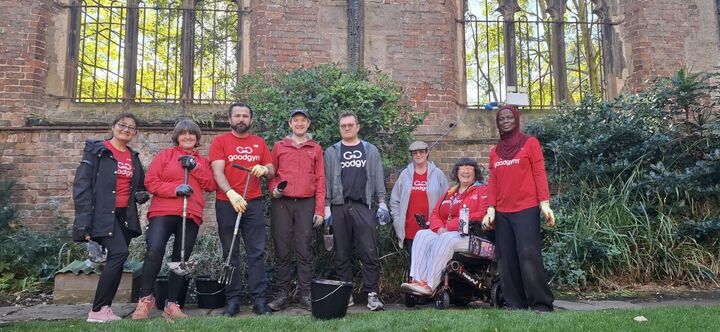
Planting Hope Among the Ruins of War On a Sunday afternoon in October, under a slightly chilly autumn sky, the group gathered at the Bombed Out Church. Some of our fellow GoodGymers had already taken part in the Saturday morning Parkrun, making this their second activity of the weekend. It is always impressive to see how much energy people can find for volunteering, even after an early morning run! It was particularly nice to welcome two new members to the GoodGym Liverpool family, and Ema also joined us for the session. After going through the plan and instructions for the day and introducing ourselves, we got started. Our task was to plant 600 daffodil bulbs. At first, it looked like a job that might take more than one session, but the group has a habit of taking on these challenges and getting things done. Naser started by turning over the soil, while the rest of the group worked together, planting the bulbs at a depth of around two to four inches. The larger bulbs went towards the back, with the medium-sized and smaller ones planted in rows and small clusters further forward. Before we could start planting, some parts of the area also needed clearing of weeds. The group quickly took care of that, and soon the ground was ready. As always, everyone was full of energy and enthusiasm. The friendly atmosphere and the spirit of working together seemed to make us forget the cold, and the time passed without us really noticing. GoodGym Liverpool has played an important part in looking after this place over the years. A quick look around is enough to see the difference. Only recently, the group had prepared the ground for new grass and given the tables and benches a fresh coat of paint. These might seem like small jobs, but together they make a real difference to the place.
A Church Without a Roof, but a Shelter for Kindness But this place deserves more than a few paragraphs about gardening and volunteering. It is not simply a green space or somewhere to carry out community activities. It is a church without a roof, yet in many ways it has become a shelter for kindness, compassion and all those who wish to stand against war. That day, our city’s roofless church was full of life. Many visitors had come to explore the site. While we were busy planting and working in the grounds, people wandered around, looking at the remains of the building and stopping to read the information boards. They came from different backgrounds and parts of the world. Each may have experienced war, conflict, and insecurity in their own way. Some have lived through war, others have heard about it from their families and communities, while some have only encountered it through films, books, and stories. But I imagine that almost everyone who visits this reminder of one of the most devastating wars in human history has a few questions running through their mind. If we had a pair of glasses that allowed us to see people’s thoughts, perhaps we would find someone asking: Wasn’t this a church? Wasn’t a place of worship supposed to be a sanctuary, a place where the vulnerable could find shelter? Shouldn’t the house of God have been a refuge for those seeking protection from violence and destruction? Someone else might wonder: Weren’t the opposing sides followers of the same faith? Didn’t they worship the same God? How could a place meant to represent faith, peace and sanctuary end up being reduced to ruins? Perhaps there is one simple but painful truth that we sometimes forget:
War has no God! Regardless of flags, borders, names or beliefs, war always leaves behind victims. More often than not, they are ordinary people who had nothing to do with starting it yet end up paying the highest price.
What Are We Planting Here? Maybe some visitors, seeing us planting flowers among the remains of a bombed-out church, might wonder what we GoodGymers are doing there. What are we trying to prove? Can planting a few hundred bulbs among all this destruction really make any difference? The answer is quite simple. We are not there to prove anything to anyone. We are simply doing our small part to bring a little more beauty, kindness, and peace into the world. We are messengers of beauty and peace. We believe that ugliness drives people apart, while beauty brings them closer together. We plant daffodils in the cold months so that, when spring arrives, they can bring a message of reconciliation and new beginnings. Among all the reminders of destruction, we plant something that represents beauty, happiness, and hope.
We plant; we do not bury. There is a deeper meaning behind these words, one that comes from my own Kurdish cultural background. In Kurdish, we have an expression of planting rather than burying when someone passes away. It reflects a way of looking at death not simply as an ending, but as the beginning of another journey. Something is returned to the earth, from which, in time, new life may emerge. This is why planting these daffodils feels particularly meaningful to me. We place these bulbs in the cold earth, knowing they will remain hidden for months before finding their way towards the light. We may not see what is happening beneath the soil, but we trust that life is quietly preparing to return. And so, among the ruins of a church destroyed by war, we plant rather than bury. We plant life where destruction once stood, hope where there was suffering, and beauty where violence left its scars.
We plant because we believe beauty deserves to be born again. Even the colours of the daffodils carry their own meanings. Their white petals remind us of purity and reconciliation, the yellow brings to mind happiness and joy, while the orange represents courage. Perhaps these flowers cannot change the world by themselves, but they can remind us that there are still things worth caring for. Daffodils are among the first flowers to appear as spring approaches. Just as winter begins to loosen its grip, they emerge from the soil, signalling the end of the cold and the beginning of a new season. That is why they have become such a powerful symbol of hope, renewal, and new life. And in a place like this, their meaning feels even more significant.
While They Make War, We Keep Planting Hope Some might ask whether we have become too caught up in symbolism. Can planting flowers and visiting a historic site really make a difference when wars are still taking place in different parts of the world? Are these efforts anything more than symbolic gestures? We come to a place that was devastated by war and bombing more than a century ago, while conflicts and violence continue to destroy lives elsewhere in the world today. There may be more than a hundred years between the events that destroyed this church and the wars we see happening now, but the consequences remain painfully familiar. For us, the message is simple:
If they continue to make war, we will continue to plant hope. These ruins remind us of that war, regardless of who starts it or who claims victory, leaves behind little more than destruction, grief, and loss. Yet there is something remarkable about seeing flowers grow in a place that was once reduced to rubble. Life finds its way back. Beauty returns to places where people once thought there could be nothing left. Possibly one day, those who make the decisions to start wars will stop for a moment and think about the people who will suffer because of them. They might think of a mother crying over the lifeless body of her child, a family losing their home, or someone forced to leave their homeland and everything they have ever known. Perhaps, if they could truly understand the pain they bring into the lives of ordinary people, they would think twice before giving the order to attack, before pulling a trigger or dropping a bomb. If only they understood that every mother’s tears send a tremor through the very fabric of existence, starting a war would never be such an easy decision. And this is where our small efforts matter. We may not be able to stop every war, but we can refuse to let hatred and destruction become the only stories our world has to tell. We can bring life back to places where bombs once took it away. We can choose kindness over hatred and build bridges between people instead of walls that divide them. That day, we planted 600 daffodil bulbs. A few months from now, when spring arrives, other visitors may walk through the same grounds and see those flowers emerging from the soil. They might never know who planted them, or how many hands worked together to prepare the ground. But hopefully, they will understand what those flowers represent.
We plant flowers so that destruction will not be the final story told by this place. Here’s to peace and reconciliation across the world, and in memory of all those who have lost their lives to war, in every country, of every language and faith.
This task supported
Since 2007 the church has been operating as a managed ruin and multidisciplinary arts venue with a programme of curated events, community engagement and creative learning projects. A gateway building within the city, crucial to both its past and present, the Bombed Out Church is a place for everyone.
See moreDiscuss this report
Sat 21st Nov at 12:48pm
Fabulous report 👌
Join us on our next session
Liverpool
Helping the home of the Irish community in Merseyside & beyond