Professor Flitwick! Tiny Forest citizen scientists work their magic
2 Goodgymers helped their local community in Barnet


1 / 2
Wednesday 12th August
Credits
Report written by Paul Salman
Share the love
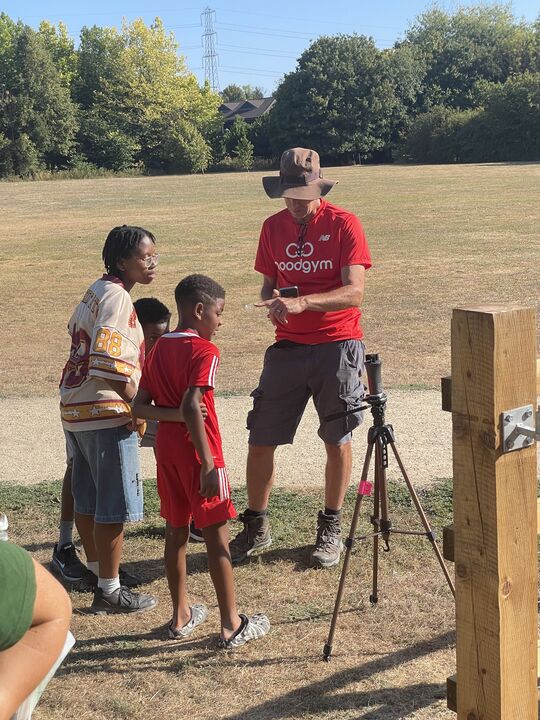
Today our Tiny Forest Tour took us to Hinksley Recreation Ground in Flitwick, ( yes like the professor ) supporting Anna from Earthwatch for another afternoon of citizen science and community engagement.
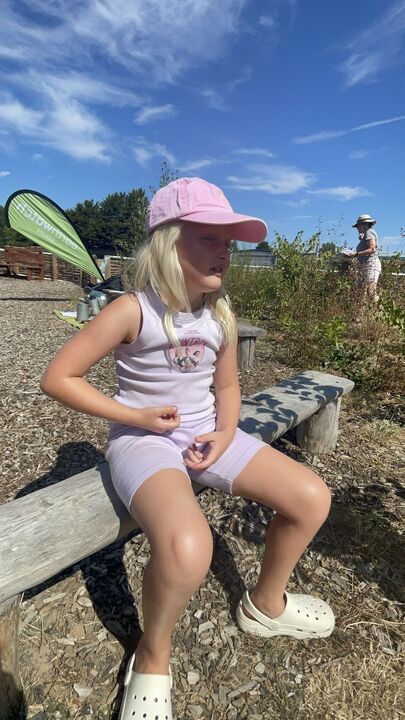
With temperatures well into the 30s, the council officers had very kindly put up a marquee to give us some much-needed shade. They had also set up a bug-hotel activity, giving the children another way to explore the wildlife around them.
This Tiny Forest was planted in February 2024 with help from local schools, but sadly it has suffered a very poor survival rate. Looking across it today, it appeared that perhaps two-thirds of the original trees had died. Whether that is down to the location, planting conditions, successive dry periods or a combination of factors isn’t entirely clear, but during the current heatwave the remaining trees were certainly struggling.
And that made today’s citizen science particularly interesting.
I helped the children with the ground-dweller survey. Before lifting the slabs, we talked about the incredibly dry soil and what sorts of creatures we might normally expect to find underneath. Almost every slab we lifted was virtually devoid of life — perhaps the odd creature scuttling away, but very little else. Even the slabs themselves were hot.
It was disappointing and quite shocking, but actually a powerful lesson. Citizen science isn’t only about finding lots of wildlife; it’s also about recording when it isn’t there and thinking about why. The children could see for themselves the connection between heat, lack of moisture and the life that depends upon the soil.
So we tried to turn that into something positive. The children loved the idea of adopting just one of the surviving trees giving it a name, keeping an eye on it and perhaps bringing it some water during these exceptionally hot and dry periods. Saving an entire forest sounds daunting; looking after one little tree suddenly feels possible.
Anna also demonstrated how quickly water soaked into the ground within the Tiny Forest compared with the surrounding grass. Despite how badly the forest is struggling, the difference was striking. It was a useful reminder that these areas aren’t only about trees: healthier, more absorbent soils can also help hold water and slow surface run-off during heavy rainfall.
Today’s results weren’t necessarily the ones we would have wanted, but that’s science. With temperatures forecast to rise again tomorrow, perhaps the lesson from Hinksley is about mitigation, understanding and appreciation — seeing what a changing climate means at ground level and discovering the small things we can do to help.
Maybe we can’t each save a forest. But perhaps we can each adopt one tree.
Go and discover the Tiny Forest yourself: Hinksley Road Recreation Ground St Paul’s Close / Hinksley Road Flitwick MK45 1ES
check out the surveys here https://tinyforest.earthwatch.org.uk/tiny-forest-sites/692-houghton-hall-park-tiny-forest
Discuss this report
Join us on our next session
Barnet
Help Engage the Community local nature and the environment